
 Tiếng Việt
Binance cashback rates help traders reduce fees through referral rebates, Spot fee cashback, and VIP discounts. Most users can receive 5% to 45% cashback depending on trading type, referral structure, and VIP level.
Moreover, Binance cashback calculation depends on trading fees, rebate percentage, trading volume, and maker or taker fees. Understanding the rebate formula helps traders estimate real trading costs and improve long-term profitability.
In addition, Binance Spot fee cashback works differently from Futures rebate programs because Spot cashback mainly reduces standard Spot trading fees, while Futures cashback focuses more on commission sharing and referral incentives. Below, CashbackCoin explains how Binance cashback works, how rebates are calculated, and how traders can maximize Spot fee cashback effectively.
Contents:
Overview of Binance Cashback Rates
Binance cashback rates are rebate percentages that return part of a trader’s transaction fees after Spot or Futures trades are completed.
To understand Binance cashback rates more clearly, it is important to explore how rebate systems work, what cashback categories exist, and why these fee reductions matter for active traders.
What Are Binance Cashback Rates?
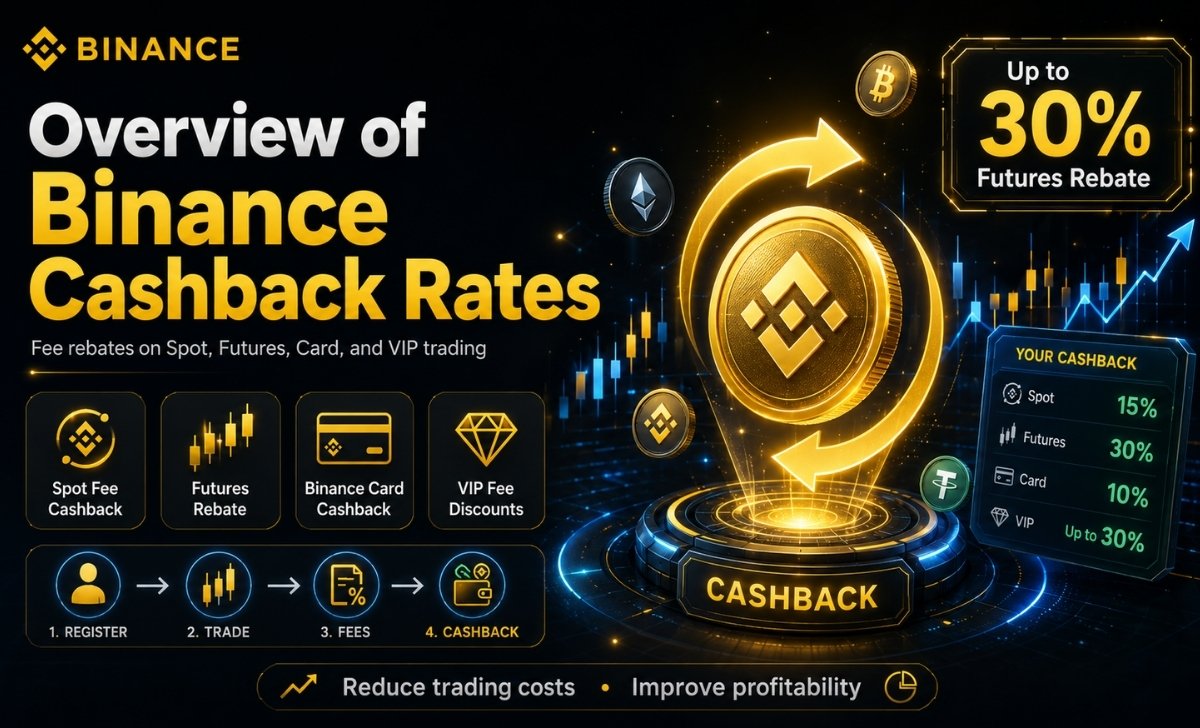
Binance cashback rates are a commission-sharing mechanism within the Binance ecosystem that allows traders to recover part of their trading fees through referral programs or VIP fee discounts.
Specifically, cashback in crypto exchanges refers to a percentage of transaction fees returned to the user after a trade is completed. Binance applies this mechanism to both Spot and Futures trading activities through referral partnerships and fee reduction systems.
The Binance cashback process usually works as follows:
- A trader registers through a referral link.
- Binance records the referral relationship.
- Trading activity generates transaction fees.
- A portion of those fees is shared back as cashback.
- Cashback is distributed automatically after settlement.
The connection between referral systems and cashback is extremely important because referral partners determine the maximum rebate percentage available to users. Some referral programs provide only basic discounts, while premium partners may offer higher Futures rebates or additional promotional cashback.
Users who want to understand how to get Binance cashback should first compare referral programs and choose a valid link that offers clear rebate conditions before registration.
According to Binance’s public referral structure, Futures referral rebates can reach up to 30% under eligible partner programs, while Spot rebates are typically lower depending on account status and market conditions.
Popular Types of Cashback on Binance
There are four major Binance cashback categories currently used by traders: Spot fee cashback, Futures rebate, Binance Card cashback, and VIP fee discounts.
The following table explains the most common cashback types available on Binance:
| Cashback Type | Main Purpose | Typical Users |
| Spot Fee Cashback | Reduce Spot trading fees | Spot traders |
| Futures Rebate | Reduce derivatives trading fees | Futures traders |
| Binance Card Cashback | Reward card spending | Binance Card holders |
| VIP Fee Discount | Lower fees based on volume | High-volume traders |
Spot Fee Cashback
Spot cashback returns part of Spot transaction fees after completed trades. This rebate normally comes from referral partnerships and standard fee discount programs.
Futures Rebate
Futures rebate is one of the most popular Binance cashback systems because derivatives trading generates larger fee volumes. Many Futures referral partners provide significantly higher cashback percentages than Spot programs.
Binance Card Cashback
Binance Card cashback rewards users who spend crypto through the Binance Card ecosystem. Cashback percentages depend on BNB holdings and card level.
VIP Trading Fee Discount
VIP users receive additional trading fee reductions based on monthly volume and BNB balances. These discounts stack with other rebate systems in some cases.
Why Do Traders Care About Cashback Rates?
Traders care about Binance cashback rates because rebates directly reduce trading costs, improve profitability, and create long-term advantages for active users.
In reality, transaction fees accumulate quickly for high-frequency traders. Even small fee reductions can significantly improve net returns over time.
For example:
- A trader generating 500,000 USDT monthly volume with a 0.04% fee rate pays 200 USDT in fees.
- With a 20% cashback rate, the trader recovers 40 USDT monthly.
- Over one year, this becomes 480 USDT in fee savings.
This advantage becomes even more important for:
- Scalpers
- Futures traders
- Arbitrage traders
- High-frequency bots
- Market makers
According to a 2024 report from CryptoCompare Exchange Benchmark Research, fee optimization remains one of the most important profitability factors for active crypto traders, especially in derivatives markets.
Understanding Binance cashback rates creates the foundation for fee optimization strategies. Next, it is necessary to explore how Binance cashback calculation actually works in real trading conditions.
How Are Binance Cashback Rates Calculated?
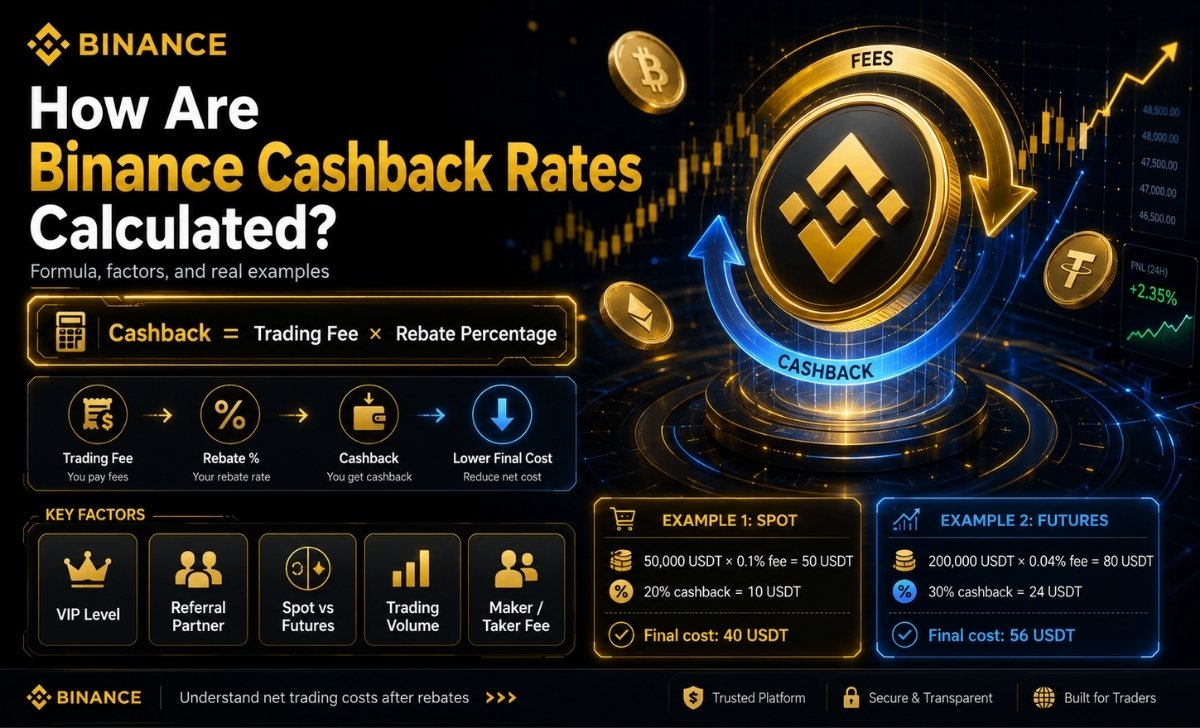
Binance cashback rates are calculated using trading fees multiplied by a predefined rebate percentage.
However, several factors such as VIP level, referral structure, trading type, and fee model can change the final cashback amount significantly.
Basic Binance Cashback Formula
The standard Binance cashback formula is:
Cashback = Trading Fee × Rebate Percentage
This formula applies to both Spot and Futures rebate systems, although the final percentages differ depending on trading conditions.
For example:
| Item | Value |
| Trading Volume | 20,000 USDT |
| Trading Fee | 0.10% |
| Total Fee Paid | 20 USDT |
| Cashback Rate | 20% |
| Cashback Received | 4 USDT |
In this case:
- Gross trading fee = 20 USDT
- Cashback rebate = 4 USDT
- Effective trading cost = 16 USDT
This difference between gross fee and effective fee is critical because professional traders focus on net trading cost after rebates rather than the visible exchange fee alone.
Understanding the final rebate amount also helps users plan Binance cashback withdrawal more accurately once the reward is credited to their wallet.
Factors That Affect Cashback Rates
Several important variables influence Binance cashback percentages.
The most significant factors include:
VIP Level
Higher VIP tiers reduce base trading fees and sometimes improve cashback efficiency.
Referral Partner
Referral partners determine how much commission is shared back with users. Premium partners usually provide higher rebates.
Spot vs Futures
Futures rebate programs are generally more aggressive because Futures trading produces higher fee volume.
Trading Volume
Large-volume traders may unlock better fee structures or custom rebate arrangements.
Maker/Taker Fee Structure
Maker orders usually pay lower fees than taker orders, which directly affects cashback value.
The table below summarizes the main cashback variables:
| Factor | Impact on Cashback |
| VIP Level | Medium |
| Referral Program | High |
| Futures Trading | Very High |
| Trading Volume | High |
| Maker/Taker Model | Medium |
Real Examples of Binance Cashback Calculation
Real trading examples help users understand how cashback affects total trading costs.
Example 1: Spot Trading Cashback
Assume:
- Spot trading volume: 50,000 USDT
- Spot fee: 0.1%
- Cashback rate: 20%
Calculation:
- Trading fee = 50 USDT
- Cashback = 10 USDT
- Final trading cost = 40 USDT
Example 2: Futures Trading Cashback
Assume:
- Futures volume: 200,000 USDT
- Futures fee: 0.04%
- Cashback rate: 30%
Calculation:
- Trading fee = 80 USDT
- Cashback = 24 USDT
- Final cost = 56 USDT
These examples show why Futures traders usually prioritize rebate optimization more aggressively than Spot traders.
Effective Trading Costs After Receiving Cashback
Professional traders calculate effective trading cost after all rebates and discounts are applied.
This process usually includes:
- Base exchange fee
- VIP discount
- BNB fee reduction
- Referral cashback
- Futures rebate
For example:
| Fee Component | Value |
| Original Fee | 100 USDT |
| VIP Discount | -10 USDT |
| BNB Discount | -5 USDT |
| Cashback Rebate | -20 USDT |
| Net Trading Cost | 65 USDT |
This fee optimization strategy becomes extremely important for algorithmic traders and high-volume scalpers.
Now that the cashback calculation structure is clear, the next step is understanding how Binance Spot fee cashback specifically operates within the exchange ecosystem.
How Does Binance Spot Fee Cashback Work?
Binance Spot fee cashback returns part of Spot trading commissions to users after eligible Spot transactions are completed.
To maximize this rebate system effectively, traders need to understand cashback eligibility, rebate percentages, and settlement timing.

What Is Binance Spot Cashback?
Binance Spot cashback is a rebate mechanism that reduces Spot trading fees by returning a percentage of commissions paid during Spot transactions.
Unlike Futures rebates, Spot cashback mainly focuses on standard Spot market activity rather than derivatives trading.
Spot cashback generally works through:
- Referral partnerships
- Promotional rebate programs
- VIP fee reduction systems
- BNB fee payment discounts
Although Spot rebates are often smaller than Futures rebates, they still provide meaningful savings for active Spot traders and long-term investors.
Eligible Spot Trades for Cashback
Most standard Spot trading pairs qualify for cashback rebates if the account is linked to a valid referral partner.
Common eligible Spot trading activities include:
- BTC/USDT
- ETH/USDT
- BNB/USDT
- SOL/USDT
- Major altcoin Spot pairs
However, several conditions must be satisfied:
- The account must register through an active referral link.
- Cashback programs must still be valid.
- Trading activity must meet minimum requirements.
- The trading pair must support rebate distribution.
Some transactions may not qualify for cashback, including:
- Internal transfer operations
- Certain promotional zero-fee pairs
- Unsupported regional products
- Expired referral programs
CashbackCoin usually recommends checking referral status immediately after account creation because many rebate programs cannot be activated retroactively later.
Users can also learn how to check Binance cashback in the referral dashboard to confirm whether Spot rebate tracking is active before making larger trades.
What Are the Typical Spot Fee Cashback Rates?
Spot fee cashback percentages vary depending on referral structure and VIP level.
The following table shows common Spot cashback ranges:
| User Type | Typical Spot Cashback |
| Standard User | 5% – 10% |
| Referral Partner User | 10% – 20% |
| VIP User | 20%+ combined discounts |
Standard referral cashback programs usually offer modest Spot rebates compared with Futures programs. However, active traders can still reduce long-term costs substantially.
Some referral systems also combine:
- Spot cashback
- BNB fee discounts
- VIP reductions
- Seasonal promotions
This layered discount structure can significantly lower effective Spot trading fees.
Understanding how Binance Spot fee cashback operates allows traders to reduce unnecessary costs and improve overall trading efficiency. More importantly, combining cashback optimization with trusted referral systems can create long-term advantages for both beginner and professional crypto traders.
Conclusion
Binance cashback rates play an important role in reducing trading expenses across Spot and Futures markets. By understanding rebate structures, cashback calculation formulas, and referral systems, traders can optimize effective trading costs and improve long-term profitability.
Moreover, Spot fee cashback provides meaningful savings for active users, especially when combined with VIP discounts, BNB fee reductions, and high-quality referral programs. Even small cashback percentages can create substantial financial advantages over time for high-volume traders.
At CashbackCoin, traders can learn how to compare cashback programs, understand rebate calculations, and maximize Binance cashback opportunities safely and efficiently. Whether you trade Spot or Futures, understanding cashback systems is one of the smartest ways to improve trading performance in today’s competitive crypto market.

Darian Velmott is a Crypto Cashback Program Specialist at CashbackCoin, specializing in crypto cashback programs, trading fee rebates, referral rewards, and exchange cost optimization. He focuses on helping traders understand cashback opportunities across major exchanges including Binance, BingX, Bitget, Bybit, and Gate.io. His content covers cashback activation, rebate tracking, fee discount analysis, reward conditions, and practical guides for crypto traders.