
 Tiếng Việt
LIST OF HTX CASHBACK GUIDE ARTICLES
HTX Cashback: Rebate Rates & How to Claim It
HTX Cashback is a trading fee rebate model that lets users receive back part of the fees they pay when trading on HTX. Instead of treating cashback as a bonus or random promotion, this guide explains it as a fee-sharing mechanism usually linked to referral, affiliate, or IB tracking.
HTX cashback rates depend on the eligible trading fees, market type, account status, and cashback partner policy. Spot and Futures trading may have different fee structures, so the actual rebate should be calculated from the real trading fee charged on each transaction.
To claim HTX Cashback, users need to register or connect their HTX account through a cashback partner, trade on eligible markets, then check and withdraw the rebate after it is confirmed. Below is the full breakdown of how HTX cashback works, how rebate rates are calculated, and how CashbackCoin can help users follow the claiming process more clearly.
Contents:
What is HTX Cashback?
HTX Cashback is a fee-rebate mechanism that pays back a percentage of the trading fees you generate on HTX exchange, distributed through an Introducing Broker (IB) or referral partner. It is not a bonus or a voucher, but a real share of the fees HTX collects from your orders.

To understand how this rebate actually reaches your wallet, we need to look at how it is generated, why referral tracking is critical, and how it differs from other reward formats.
How HTX Cashback Is Generated From Trading Fees
HTX Cashback is generated directly from the trading commissions that HTX charges on each Spot or Futures order you execute. Every time you open or close a position, HTX deducts a small fee, and a portion of that fee is allocated to the IB partner who referred you.
When you register through a cashback partner like CashbackCoin, the partner shares the IB commission back with you in the form of cashback. The mechanism works as follows:
- HTX charges a maker/taker fee on every executed order
- A fixed percentage of that fee is paid to the referring IB
- The IB partner then redistributes a defined share of that commission to your cashback account
- The rebate is calculated on the actual fee paid, not on notional volume
This means cashback only appears when real trading fees are paid. Wash trades, zero-fee promotions, or self-matching orders that do not generate fees will not produce any rebate.
Why Referral or IB Tracking Matters Before You Trade
Referral or IB tracking matters because HTX Cashback can only be calculated when the user’s account is connected to the correct cashback relationship before eligible trading activity happens.
This step is often more important than the cashback rate itself. A high rebate rate is useless if the account is not tracked properly. If a user opens an HTX account without using the correct cashback link or referral setup, the system may not assign that account to the cashback partner. As a result, later trading fees may not be eligible for cashback sharing through that partner.
For new users learning How to get HTX commission rebate, the cleanest path is to use the Register HTX Cashback process before creating the account, helping activate tracking from the beginning and reduce the chance of missing eligible rebates.
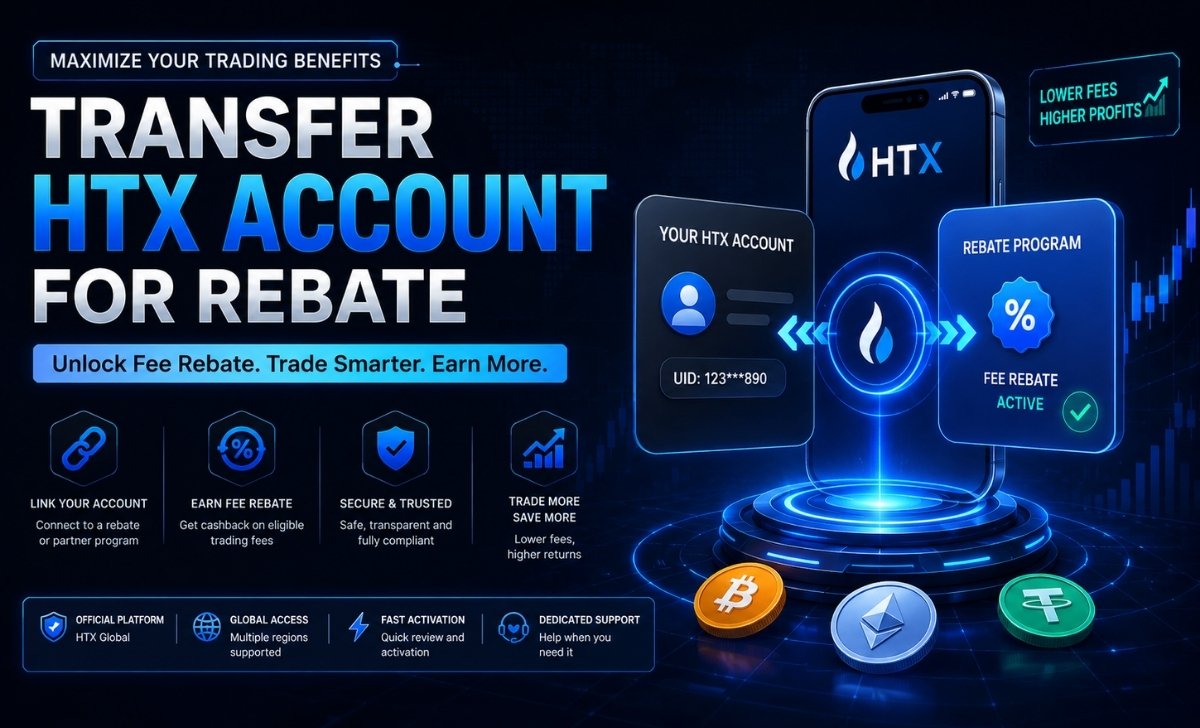
For existing users, the situation can be more complex. Some accounts may already be linked to another referral source. In that case, the user may need to check whether changing or updating referral attribution is possible. If supported, the Transfer HTX account for rebate process can help users understand the next step before assuming their current account is eligible.
The tracking relationship usually affects four key areas:
| Tracking Factor | Impact on Cashback | |
| Correct registration link | Helps assign the account to the cashback partner | |
| Referral or affiliate code | May determine whether the account is eligible | |
| Existing account status | May limit or affect cashback activation | |
| Trading after tracking is active | Ensures future eligible fees can be counted |
This is why users should not trade first and check cashback later. The safer sequence is to confirm tracking first, then trade. Once trading starts under the correct setup, the user has a clearer path to rebate calculation and withdrawal.
CashbackCoin can serve as a guide in this part of the journey by helping users understand whether they should register a new HTX account, connect an existing account, or review referral conditions before expecting cashback.
HTX Cashback vs Bonus, Voucher and Fee Discount
HTX Cashback differs from bonuses, vouchers, and fee discounts in how value is delivered, when it becomes usable, and whether it is withdrawable as real funds. Cashback is post-trade real money, while the others are pre-trade or conditional credits.
| Reward Type | Source | When Received | Withdrawable |
| Cashback | IB commission share | After trade fee is paid | Yes, as real assets |
| Bonus | Promotion budget | Upon event participation | Often locked / wager required |
| Voucher | Marketing campaign | Before trading | No, only deductible from fees |
| Fee Discount | VIP / token holding | Applied at order execution | Not applicable, just lower fee |
The table above shows that cashback is the only reward category that returns liquid funds tied to your actual trading activity, making it the most transparent form of fee return for active traders on HTX.
Having clarified what HTX Cashback is and how it differs from other reward formats, the next step is to look at the actual rebate percentages you can expect.
HTX Cashback Rebate Rates
HTX Cashback rebate rates are typically distributed across three tiers: standard Spot rebates around 30–50%, Futures rebates around 40–70%, and VIP-adjusted rates that can deviate based on fee schedules. The exact figure depends on the partner and your trading profile.

To make the numbers practical, let’s break down Spot vs Futures rates, the variables that change your effective rate, and how to compute your own cashback from trading fees.
Spot and Futures Rebate Rates Explained
Spot and Futures rebate rates should be evaluated separately because each market can have different fee structures, eligible transactions, and rebate conditions.
Spot trading usually refers to buying and selling crypto assets directly. Futures trading usually involves derivative contracts, leverage, maker/taker fee models, and different fee calculations. Because the fee structure is not always the same, cashback should not be estimated with one universal number for every market.
The table below gives users a practical framework for reading HTX cashback rates:
| Market Type | Fee Source | Cashback Logic | What Users Should Check |
| Spot Trading | Spot maker/taker trading fees | Rebate may be based on eligible spot fees | Supported pairs, fee tier, discount usage |
| Futures Trading | Futures maker/taker trading fees | Rebate may be based on eligible futures fees | Contract type, leverage fees, maker/taker rate |
| Copy Trading | Fees from copied trades if eligible | May depend on platform rules | Whether copied trades qualify |
| Grid/Bot Trading | Fees from automated strategies | May vary by product or promotion | Whether bot activity is included |
| Promotional Campaigns | Campaign-specific fees or volume | May offer temporary rebate benefits | Date, market, volume, claim rules |
This table helps users avoid one common mistake: applying a single advertised rate to every trading activity. In reality, a cashback rate may apply only to specific market types or only after certain conditions are met.
For example, a user who trades only Spot should check whether Spot trading fees are included in the cashback program. A user who trades Futures should verify whether Futures fees are eligible and whether maker and taker orders receive the same treatment. A user who trades through bots or copy trading should confirm whether those activities are counted.
Another important detail is fee deduction. If a user applies fee discounts, token deductions, vouchers, or other exchange benefits, the eligible fee amount for cashback may change. Cashback is normally calculated from eligible fees after the exchange determines what fee has actually been charged.
For this reason, users should review rebate rates through a practical lens: “Which fees are eligible, and what percentage of those fees can be returned?” This leads naturally to the next question: what can change the actual rate a user receives?
What Can Change Your Actual Cashback Rate?
Your actual cashback rate can shift due to VIP tier discounts, HTX token (HTX) deductions, promotional zero-fee pairs, and the partner’s tier policy. Each of these factors changes either the fee base or the share you receive.
Specifically, the most common variables include:
- VIP Level on HTX: Higher VIP tiers pay lower base fees, which reduces the absolute cashback even if the percentage stays the same
- Token-based fee deduction: Using HTX tokens for fee payment may lower the eligible cashback base
- Maker vs Taker: Maker rebates from HTX itself are not double-counted in cashback
- Promotional pairs: Zero-fee or fee-free campaigns generate no cashback
- Partner volume tier: Some cashback partners increase your share once monthly volume crosses a threshold
Active traders who understand these levers can often optimize their setup to maintain the maximum effective rebate.
How to Calculate HTX Cashback From Trading Fees
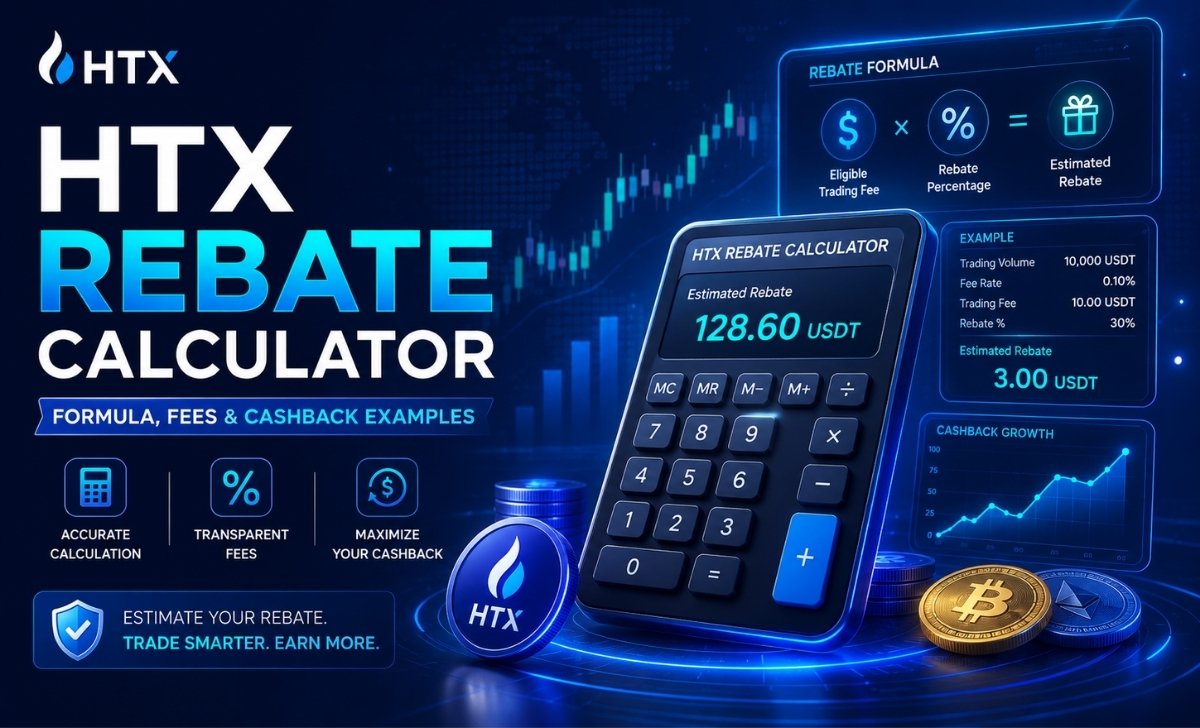
HTX Cashback can be calculated by multiplying eligible trading fees by the applicable rebate rate after confirming that the account and trades qualify.
The basic formula is simple: HTX Cashback = Eligible Trading Fees × Cashback Rebate Rate
This formula helps users estimate their potential rebate before making trading decisions. It also prevents the common misunderstanding that cashback is calculated directly from trading volume.
Here is a simple example:
| Item | Example Value |
| Monthly trading volume | 100,000 USDT |
| Average trading fee rate | 0.10% |
| Estimated trading fee paid | 100 USDT |
| Cashback rebate rate | 30% |
| Estimated cashback | 30 USDT |
In this example, the trader does not receive 30% of trading volume. The trader receives 30% of eligible trading fees. That is the key difference.
The calculation becomes more accurate when the user knows the exact fee paid. For this reason, users should not rely only on trading volume. They should review the actual fee charged in their HTX transaction history and then apply the correct rebate rate.
For a more practical estimate, users can use HTX rebate calculator before trading heavily. This helps them understand how fee level, trading frequency, and rebate percentage may affect the final cashback amount.
A more detailed calculation may include:
| Variable | Meaning | Why It Matters |
| Eligible fee | The trading fee that qualifies for cashback | Main base for calculation |
| Rebate rate | Percentage returned to the user | Determines cashback size |
| Trading market | Spot, Futures, or other eligible products | Can change fee and rebate logic |
| Fee discount | Any discount applied before cashback | May reduce eligible fee base |
| Payout cycle | When cashback is confirmed | Affects when user can withdraw |
For example, if a user pays 250 USDT in eligible Futures trading fees and the applicable cashback rate is 25%, the estimated cashback would be: 250 USDT × 25% = 62.5 USDT
If another user pays only 20 USDT in eligible fees at the same rate, the estimated cashback would be: 20 USDT × 25% = 5 USDT
This shows why cashback is more meaningful for active traders. However, even smaller traders can benefit because cashback reduces trading cost without requiring them to change their trading strategy.
The calculation also helps users compare cashback with other rewards. A one-time welcome bonus may look larger at first, but recurring cashback can become more valuable over time if the user continues trading and generating eligible fees.
After users know how rates and calculations work, the next step is execution: how to claim HTX Cashback correctly from the beginning.
How to Claim HTX Cashback
To claim HTX Cashback, users should register or connect through a cashback partner, trade on eligible HTX markets, then check and withdraw the confirmed rebate.
This process looks simple, but the order matters. Users should not start by trading and then look for cashback afterward. The safer path is to make sure the account is tracked first, then trade, then monitor rebate confirmation.

CashbackCoin can support this flow by giving users a clear claim path instead of leaving them to guess whether their account is eligible.
Register or Connect Your HTX Account Through a Cashback Partner
The first step to claim HTX Cashback is to register or connect your HTX account through a cashback partner before generating eligible trading fees.
For new users, this usually means starting with the correct cashback registration path. The Register HTX Cashback process helps users create an HTX account with the right tracking relationship from the beginning. This is the cleanest option because the account is linked before trading starts.
For existing users, the process may depend on whether the account is already linked to another referral or affiliate source. If the account is not eligible or was registered under another referral relationship, the user may need to review whether referral changes are possible. In that case, Change HTX referral for cashback is the more relevant path.
A clean registration process should include these steps:
| Step | Action | Purpose |
| 1 | Visit the cashback partner page | Start from the correct tracking source |
| 2 | Register or log in to HTX | Create or access the trading account |
| 3 | Confirm referral or cashback tracking | Make sure the account is attributed correctly |
| 4 | Complete identity or account requirements if needed | Unlock full exchange functions |
| 5 | Start trading only after tracking is confirmed | Protect future rebate eligibility |
The key rule is simple: tracking should come before trading. If a user trades first, those earlier fees may not qualify for cashback through the partner. This is why registration order is not a minor detail; it directly affects the ability to receive rebates.
Users should also use consistent account information when required. If the cashback partner asks for HTX UID, email, or account details for verification, the user should provide accurate information. Incorrect details may delay confirmation or prevent the system from matching the account.
CashbackCoin can make this process easier by explaining what users need to prepare before registration, such as HTX UID, account status, and whether they are a new or existing HTX user.
Once the account is correctly registered or connected, the user can move to the next stage: generating eligible trading fees.
Trade on Eligible HTX Markets and Generate Fees
The second step is to trade on eligible HTX markets because cashback can only be generated when qualifying trading fees are created.
This is where cashback becomes active in practice. A registered account alone may not produce any rebate. The user needs to place trades on supported markets and generate fees that qualify under the cashback terms.
Eligible activity may include Spot trading, Futures trading, or other supported HTX products depending on the cashback policy. However, users should not assume that every activity is automatically included. Some products, campaigns, pairs, or strategies may have separate conditions.
The table below shows how different trading activities may affect cashback expectations:
| Trading Activity | Cashback Potential | User Should Check |
| Spot trading | May generate rebate from spot fees | Supported pairs and actual fee charged |
| Futures trading | May generate rebate from contract trading fees | Maker/taker fee, leverage product rules |
| Bot or grid trading | May qualify if supported | Product eligibility and campaign terms |
| Copy trading | May vary by platform rule | Whether copied trades are included |
| Zero-fee campaigns | May generate little or no cashback | Whether fees are actually paid |
The phrase “eligible trading fee” is important. If a trade has no fee, a fully discounted fee, or a fee covered by a voucher that does not count toward rebate, the cashback amount may be reduced or unavailable. Cashback cannot be calculated from a fee that does not exist or does not qualify.
Users should also understand that cashback does not change trading risk. A rebate can reduce costs, but it does not protect users from price volatility, liquidation risk, poor entries, or overtrading. This is especially important for Futures traders using leverage.
A disciplined trader should treat cashback as a cost-efficiency layer, not as a reason to trade more aggressively. The goal is not to generate fees for the sake of cashback. The goal is to receive part of the fees back from trades the user already plans to make.
CashbackCoin can help users frame HTX Cashback correctly: trade normally, follow risk management, and use cashback as a way to improve net trading cost over time.
After trading activity creates eligible fees, the next step is to check whether the cashback has been confirmed and can be withdrawn.
Check, Confirm and Withdraw Your Cashback
The third step is to check your rebate status, confirm the credited amount, and withdraw HTX Cashback when it meets the payout conditions.
Cashback usually needs a confirmation cycle. This means the rebate may not appear instantly after each trade. Depending on the cashback partner’s process, the system may need time to collect trading data, verify eligible fees, calculate rebate, and credit the user’s cashback balance.
The withdrawal flow often includes these stages:
| Stage | What User Sees | What It Means |
| Pending | Cashback is being calculated or verified | Trading data may still be under review |
| Confirmed | Cashback amount is approved | User can expect it to become available |
| Available | Cashback can be withdrawn or used | Payout conditions have been met |
| Withdrawn | User has requested or received payout | Rebate cycle is completed |
Users should keep records of their trading fees, UID, cashback account, and payout history. This makes it easier to resolve issues if cashback does not match expectations.
When the rebate is available, users can follow HTX cashback withdrawal to understand the withdrawal process. Depending on the platform setup, cashback may be paid on a supported asset, credited to a balance, or withdrawn after reaching a minimum amount.
A clear withdrawal process should explain:
- Which asset is used for payout
- Minimum withdrawal amount
- Withdrawal schedule
- Processing time
- Required account verification
- Any fees or restrictions
- How to contact support if the rebate is missing
The most important habit is to check cashback regularly, especially after high-volume trading periods. Active traders may generate larger rebate amounts, so small tracking or payout issues can become more costly if ignored.
CashbackCoin can support users by giving them a structured way to monitor rebate status instead of relying only on memory or screenshots. This is useful for traders who use multiple exchanges and need to compare cashback across platforms.
Once users understand withdrawal, they also need to know why cashback may fail or appear late.
Common Reasons HTX Cashback Is Not Credited
HTX Cashback may not be credited if the account is not tracked correctly, trades are not eligible, fees are not confirmed, or the payout cycle has not been completed.
This issue is common because cashback depends on multiple conditions. If any condition fails, the rebate may be delayed, reduced, or unavailable.
The most common reasons include:
| Reason | Explanation | What to Do |
| Wrong registration path | Account was not created through the cashback partner | Check account tracking status |
| Existing referral link | Account may already belong to another referral source | Review whether referral change is possible |
| No eligible trading fee | Trades did not generate qualifying fees | Check fee history and market eligibility |
| Promotion mismatch | User expected a campaign rate that no longer applies | Confirm current cashback terms |
| Payout cycle delay | Cashback is still being calculated | Wait for the next confirmation cycle |
| Wrong UID or account details | Partner cannot match the user account | Submit accurate account information |
| Minimum withdrawal not reached | Cashback exists but cannot be withdrawn yet | Continue checking available balance |
A missing cashback balance does not always mean the rebate is lost. Sometimes the data is still pending. However, if the account was not tracked before trading, earlier fees may not be recoverable through that cashback partner.
That is why the best prevention is to follow the process in the right order:
- Confirm cashback registration or referral tracking.
- Verify whether Spot or Futures activity is eligible.
- Trade normally after tracking is active.
- Check cashback records after the confirmation period.
- Withdraw only when the rebate becomes available.
If users are unsure, they should not keep trading blindly while waiting for cashback. They should confirm the setup first. CashbackCoin can help users identify whether the issue is related to registration, rate calculation, trade eligibility, or withdrawal conditions.
In short, HTX Cashback works best when users treat it as a structured process, not a vague reward. Correct tracking creates eligibility. Eligible trades generate fees. Confirmed fees create rebate. Available rebate can then be withdrawn.
Conclusion
HTX Cashback helps traders reduce their real trading cost by returning part of eligible trading fees through a referral, affiliate, or IB-based rebate model. The core idea is simple: users register or connect their HTX account correctly, trade on eligible markets, generate trading fees, and receive cashback based on the applicable rebate rate.
The most important points are tracking, rate clarity, and withdrawal conditions. A user should not focus only on the highest advertised rate. Instead, they should confirm whether their HTX account is tracked, which markets qualify, how the rebate is calculated, and when the cashback can be withdrawn.
CashbackCoin can help users follow this process with clearer steps for How to get HTX commission rebate, Transfer HTX account for rebate, HTX rebate calculator, and HTX cashback withdrawal. To make HTX trading more cost-efficient, start by checking your cashback eligibility before placing your next trade.